Connected devices
When your smart home devices work against each other
A home battery that empties itself into the car. Two apps with two different charging plans. Each smart device does its own job well — but nothing is looking after the whole home.
Buy a home battery, an electric car and a smart tariff, and you might expect them to work together. Each one is sold as smart. Each one has an app that promises to save money. Yet many households discover, often on the first night, that their devices have no idea the others exist.
This summer we spoke at length to nine households who already live with this equipment: smart tariffs, electric cars, heat pumps, home batteries and solar panels. We wanted to hear what was annoying them, not to sell them anything. One story came up again and again.
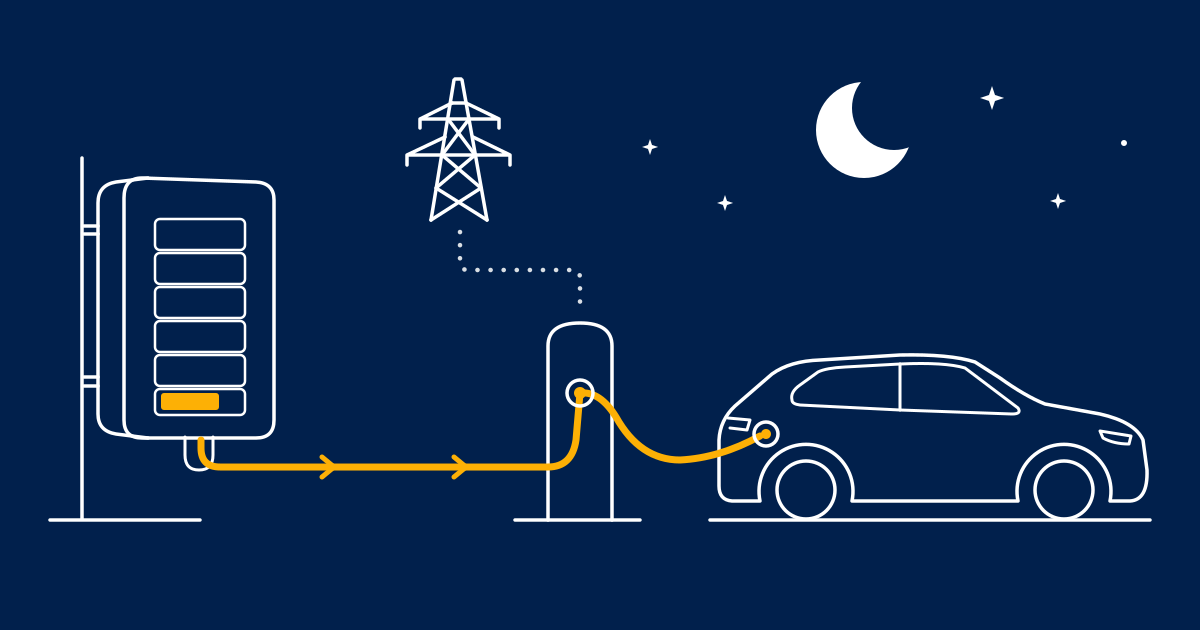
The battery that charges the car
Five of the nine households had both a home battery and an electric car. Four of those five had watched the same thing happen. The car started charging during a cheap overnight period, and the home battery saw a large new demand in the house and did what it was built to do: it discharged to cover it.
The result was the opposite of what the household wanted. Instead of filling the car with cheap electricity from the grid, the battery emptied energy it had stored for the evening into the car. By the time the expensive part of the day arrived, the battery had nothing left for the home. One owner noticed it on the very first day and could not understand why a product sold as smart was behaving this way.
Octopus Energy describes the same problem in its own help pages. A smart tariff can control when a car charges, but not where the energy comes from. Most home batteries cannot tell a car from a kettle, so a charging car simply looks like a very hungry household.
The common fix is to stop them seeing each other
The standard fix is electrical. If an installer moves the battery's current clamp, or wires the charger on its own supply, the battery can no longer see the car. Three of the four households fixed it this way, one only after calling the installer back because the clamp was missed the first time. The fourth changed the battery's overnight schedule until the two stopped clashing.
The fifth household with both devices never had the problem, because its owner kept the battery and the car apart from the start. Joining them up seemed far more trouble than it was worth.
So in four of the five homes, the battery and the car now cannot see each other. That fixes this one problem, and it is sensible advice. But it makes two expensive pieces of equipment deliberately blind to each other. The car can no longer soak up spare solar power on a sunny afternoon, and the car and battery cannot make room for each other.
When owners keep their two largest flexible devices apart because they do not trust them to cooperate, that is not a wiring problem. It is a gap in the products.
It is not only batteries and cars
Other households described conflicts that no clamp could fix, because they happen in software.
- One household had a charger app and a supplier's smart tariff that each kept their own charging schedule for the same car. The schedules clashed. To charge the car from their own solar panels, the owner had to remove the car from the tariff, switch on the charger's solar mode, then add the car back at sunset.
- Another household used an automatic battery service day to day and also took part in paid flexibility events through a different company. For each event, they had to switch the automatic service off by hand, so that they knew the event would actually happen.
- Several households ran four or five energy apps. Each showed part of the picture. None showed what the home as a whole was doing, or why.
None of these companies is doing anything wrong. A battery maker optimises the battery. A charger maker optimises the charger. A supplier optimises its tariff, and a flexibility provider optimises its events. Each one is reasonable on its own. The trouble starts where they meet — and in a home, they always meet.
Why this matters beyond one household
Britain is counting on homes like these. The government's flexibility plans rely on millions of cars, batteries and heat pumps moving their demand away from the busy early evening and towards times when electricity is cheaper, cleaner and easier to supply. Much of that is meant to come from households choosing to take part.
If the household does not trust the result, none of that works. A battery that empties into the car, or two apps fighting over one charge, teaches the opposite lesson: connect less, automate less, and keep things apart. Each bad night makes the next device harder to sell and the next flexibility event harder to join.
The households we spoke to were not short of equipment, or of interest. What they asked for was simple: one place to see and control the whole home, and confidence that the devices in it are pulling in the same direction.
Where Wiggle fits
Wiggle is being built for exactly this gap. It is designed to work alongside the devices and tariffs a household already has, show what each of them is doing in one place, and help them work as one home rather than five separate products.
We are starting carefully. Households see what Wiggle finds before it changes anything, and manual control always wins. The aim is a home where the battery, the car, the heating and the tariff stop working against each other — without the household having to referee.
Sources and further reading
About this research: Wiggle held nine qualitative interviews with households in Great Britain in July and August 2026. The findings describe what these households told us; they are not a survey of all homes. Interviewees are not named.