Home upgrades
Cheap loans pay for the kit. The extra £300 depends on timing
The government's new loans help households pay for a heat pump, solar panels and a battery. Its own figures say a time-of-use tariff could add £300 a year to the savings — but that part depends on when the home uses its energy, not on what is installed.
Paying for a heat pump, solar panels and a home battery has long been the biggest barrier to owning all three. This week the government took a real step towards lowering it. The Warm Homes Loan Scheme offers cheaper loans for the equipment, and some of them are interest free.
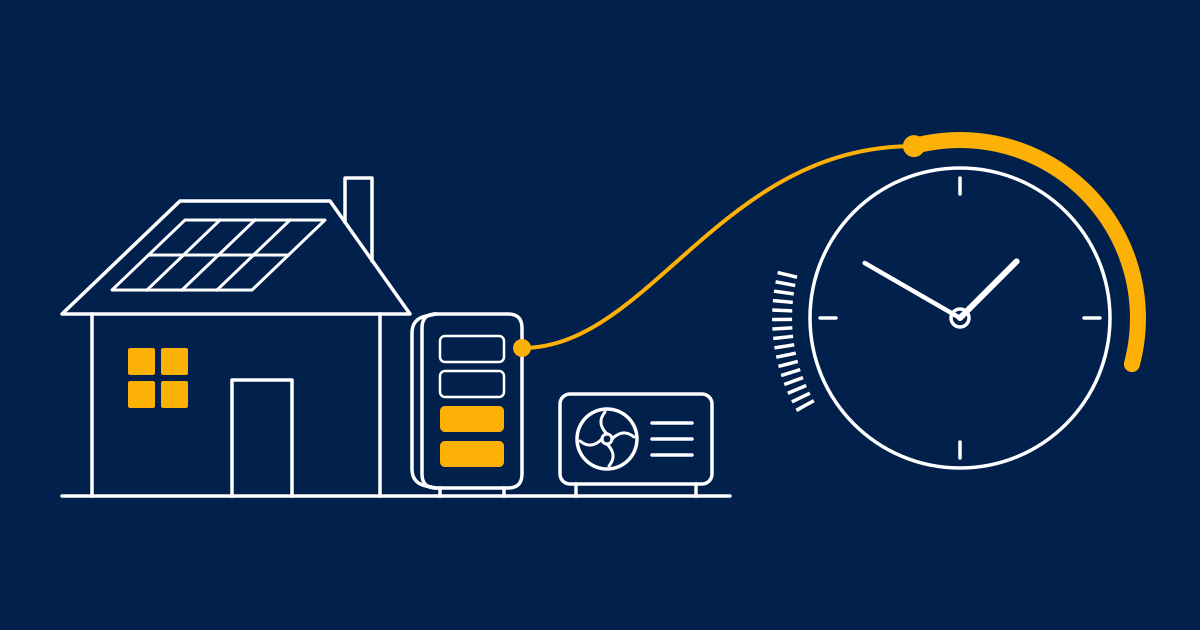
The government's headline figure is striking. Installing a heat pump, battery and solar panels could save a household up to £550 a year on its energy bills, rising by a further £300 a year with a time-of-use tariff. Those two numbers come from different places. The first comes mostly from the equipment. The second comes from when the home uses its energy — and that does not happen by itself.
What the scheme offers
The scheme is open to households across the UK. Ten lenders are offering loans at first, with more expected to join. The government says the scheme can cut interest rates by up to five percentage points compared with a regular loan, and some loans can run for up to 30 years.
- Solar panels: loans of up to £15,000.
- Home batteries: loans of up to £15,000.
- Air-to-water heat pumps: loans of up to £20,000.
- Ground-source heat pumps: loans of up to £35,000.
Homeowners can combine a loan with a heat pump grant of up to £9,000 through the Boiler Upgrade Scheme, or through Home Energy Scotland in Scotland. Installations must use MCS-certified installers.
Where the £550 comes from
The government's Warm Homes Plan technical annex explains the £550 estimate. It modelled a typical home with basic insulation, a heat pump, a 4 kW solar array and a 4 kWh battery. The home no longer pays a gas standing charge. On an ordinary tariff, the battery simply stores spare solar power and uses it later in the day.
That is how many home batteries already work out of the box. Most of the £550 comes from the equipment doing its own job: the heat pump replacing the boiler, and the solar panels and battery reducing what the home buys from the grid.
Where the extra £300 comes from
The factsheet does not show how the government reached the £300 figure. The closest published explanation is in the same annex, which describes extra modelling of an illustrative time-of-use tariff. That tariff has eight cheap hours, 13 standard hours and three peak hours each day. In the model, the battery charges in the cheap hours, aims to use as much of the home's own solar power as possible, and avoids the peak.
In other words, the extra saving assumes that something decides, every day, when the battery charges and when it holds back. The annex also cautions that its savings estimates should be read separately rather than added together. But the factsheet presents the £300 on top of the £550, so on its own headline, more than a third of the total depends on timing.
Why timing does not look after itself
Signing up to a time-of-use tariff changes the price of electricity through the day. It does not change what the battery, heat pump or car does. Someone, or something, has to make those devices follow the prices.
- The battery needs new instructions. A battery set to store spare solar power does not know about cheap overnight hours. If the household wants it to charge from the grid at night, someone has to set that up, and change it when the tariff's hours change.
- Cheap power and free power compete for the same space. On a winter night it makes sense to fill the battery from the grid. On a sunny summer night it does not, because tomorrow's solar power will need room. Getting this right means looking ahead at the weather each day.
- The heat pump has its own timing. A heat pump can sometimes warm the home a little ahead of an expensive period, but the cheapest hour is not always the best time to run it. That balance changes with the weather and the home.
- An electric car changes everything. The government's model does not include one, but many of these homes have one or will add one. In our own interviews, four of five households with both a home battery and an electric car had watched the battery empty itself into the car during a cheap overnight charge.
Each device has its own app and its own idea of what smart means. None of them is looking after the whole home. A household can do the work by hand, and some do. But most people would rather not check prices and weather every day to collect a saving they have already paid for with the equipment.
Why this matters for the loan
A loan turns a large upfront cost into monthly repayments. Many households will weigh those repayments against the savings they expect. If part of the expected saving depends on daily timing, that part is the least certain — and it is the part the loan does not pay for.
The same timing also matters beyond one home. The government's flexibility plans count on millions of heat pumps, batteries and cars moving their demand away from the busy evening peak. The scheme puts more of that equipment into homes. Whether it actually moves depends on how it is controlled.
Where Wiggle fits
Wiggle is being built for this part. It is designed to work alongside the devices and tariff a household already has, look ahead at prices and weather, and help the battery, heat pump and car work as one home rather than three separate products.
We are starting carefully. Households see what Wiggle finds before it changes anything, and manual control always wins. The aim is simple: if a household has already paid for the equipment, it should not also have to do the timing.
Sources and further reading
Savings figures are the government's estimates, not guaranteed savings and not Wiggle's results. Loan terms come from the government factsheet published on 27 October 2026; check current terms with a participating lender. The interview finding comes from nine qualitative interviews Wiggle held with households in Great Britain in July and August 2026.