Insulation and heat pumps
The cheapest energy is the energy your home doesn't need
A better home uses less energy to stay comfortable. Good control then makes the energy it still needs work harder — and cost less.
After five heatwaves, the UK is on course for its hottest summer on record. The heat has exposed a basic problem with many British homes: they lose warmth too easily in winter and gain it too easily in summer.
A recent BBC report visited a retrofitted 1960s ex-council house in south London. On a 35°C day, it was 10°C cooler inside without air conditioning. Insulation, airtight construction, high-performance windows, careful shading and managed ventilation all helped to hold a comfortable temperature.
This points to the first rule of a lower energy bill: reduce the amount of energy the home needs in the first place.
The cheapest unit of energy is the one your home doesn't need.
Start with the building
Insulation slows the movement of heat. In winter, warmth stays inside for longer. In summer, insulation can help keep heat out — as long as windows are shaded before the sun hits them and cooler night air is used when it is available. Airtight homes also need suitable ventilation so fresh air and moisture are managed properly.
The home featured by the BBC was taken close to the Passivhaus standard. Its owner estimates that energy demand fell by 88%, saving nearly £750 a year. The full retrofit cost around £80,000, so it is not a simple payback story and it will not be realistic for every household. You do not need a Passivhaus to benefit. Most homes will improve gradually, and better timing can reduce the cost of the energy they use today.
The useful lesson is broader than Passivhaus. Loft and wall insulation, draught reduction, better windows, external shading and attention to gaps in the insulation can each reduce the work needed to hold a comfortable temperature. The right order and detail depend on the home, and poorly designed work can create damp or overheating problems. Whole-house advice matters.
Then make each unit of electricity go further
Once a home needs less heat, an efficient heat pump is a strong match. It moves heat from outside to inside, so one unit of electricity can provide several units of heat. The exact performance depends on the weather, the system design and how it is run.
Heat pumps usually work best with lower water temperatures and long, steady running. A well-insulated home makes that easier: it loses heat slowly, so the system does not have to keep chasing the temperature at high output.
This is why the building and the heating system should be treated together. A larger heat pump cannot compensate elegantly for avoidable heat loss. Better fabric reduces demand; correct heat-pump sizing, emitters and controls meet what remains efficiently.
Run it at the right times
On a time-of-use tariff, the price of electricity can change every half hour. A well-insulated home can hold warmth, which creates some freedom over when the heat pump draws electricity. It might gently pre-warm before an expensive evening period, ease back while prices are high, and return to its normal steady pattern afterwards.
The cheapest half hour is not automatically the best time to run. A heat pump may be less efficient when the air outside is colder, and switching it off for too long can force it to work harder later. Good control weighs the tariff, outside temperature, flow temperature, how quickly the home loses heat and the comfort people have asked for. Hot-water hygiene and any quiet-time limits must also stay as firm constraints.
That calculation changes from one home to another and from one day to the next. Doing it well can cut cost without asking someone to keep checking prices or adjusting the thermostat.
Where Wiggle fits
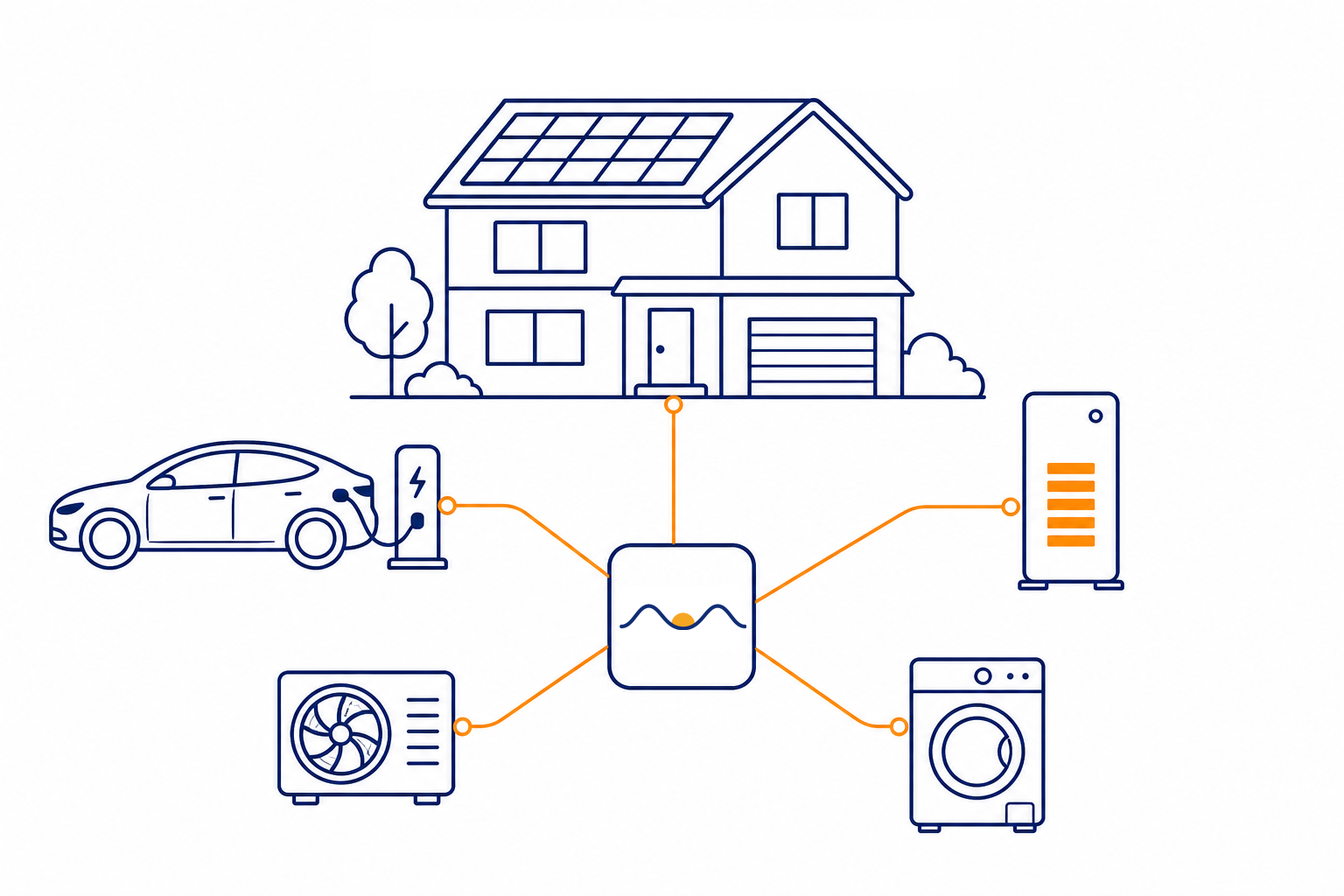
Wiggle works with the home you have. Insulation can reduce how much energy it needs; Wiggle is being built to make the energy it still uses cheaper and lower carbon by coordinating when devices run.
You set the comfort limits. Wiggle works out when to run and how much to shift. The aim is a home that needs less energy, uses the remainder efficiently and buys it at better times — while still feeling like home.