Energy bills
What a zero-bills home costs, and what to do without one
A family in Milton Keynes now has no energy bill. The idea is sound, but the equipment behind it is costly. Most homes can still gain from smarter timing.
The energy price cap rose by 4% today, and a further rise of about 16% is forecast for January. Against that, a Guardian report describes a home that will not receive a bill at all. The idea is worth understanding, because it shows both what is possible and what it takes.
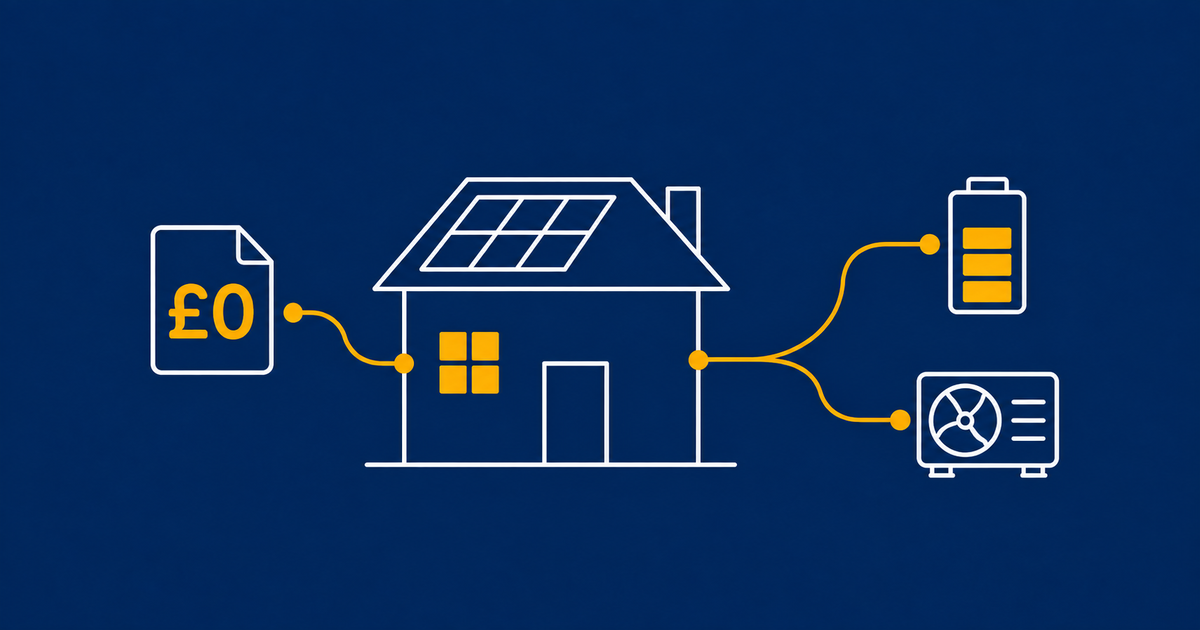
What the Naylors have
The Naylors live in a four-bedroom house in Milton Keynes, built in the 1980s. It now has a heat pump, 17 solar panels, four new radiators and a large battery in the garage. Under Octopus Energy's Zero Bills tariff, the family will not be billed for five years for heating, lighting or the devices a family of five uses. The condition is that they stay inside a fair-use limit.
The tariff works because the house is a small power station. It makes slightly more energy over a year than it is expected to use. It sells the surplus back to the grid, and that income pays for the energy the house still buys.
What it takes
The Guardian reports several conditions. A home needs good insulation, solar panels, a heat pump and a battery. It must have no gas at all, even for cooking. The promise does not cover charging an electric car. The best candidates are homes built in the last ten years.
The work in the Naylors' home was paid for by Santander as part of a project on how to fund energy upgrades. Without that, the solar panels, heat pump and battery would have cost just under £20,000 after a government grant.
The sum for everyone else
The Guardian gives one example of the cost of borrowing. A £20,000 home improvement loan at 6.4% over five years means repaying £389 a month. The Naylors say their bills were about £130 a month.
The two figures are not a like-for-like comparison. The loan buys equipment that lasts longer than five years, and it protects the family from future price rises. But the monthly cost today is about three times the bill it removes. For many households, the sum does not work yet, even if the direction is right.
A zero-bills home is a good destination. Most homes need a way to start from where they are.
What a home can do now
A zero-bills home gets its result from two things: the equipment, and when the home buys, stores and sells energy. The battery lets the house use cheap or free energy later. The heat pump turns that energy into heat efficiently. Both depend on good timing as well as good hardware.
A home with a smart tariff, an electric car, a battery or a heat pump can already use some of that timing. Prices on a time-of-use tariff change every half hour. Moving charging, hot water or pre-heating into cheaper and cleaner periods lowers what the same energy costs. The household still gets the same warmth, the same hot water and a full car by the morning.
This does not give a zero bill. It does not need £20,000 or the removal of a gas boiler either. Each device a household adds later can join the same plan.
Where Wiggle fits
Wiggle is being built for the home you have today. It works out when each device should run, within the comfort and ready-by limits you set, so you do not have to watch prices or change settings yourself.
For some homes, the road may lead to solar panels, a battery, a heat pump and a tariff like the one in this story. The same coordination applies at every step on the way.